Call Today
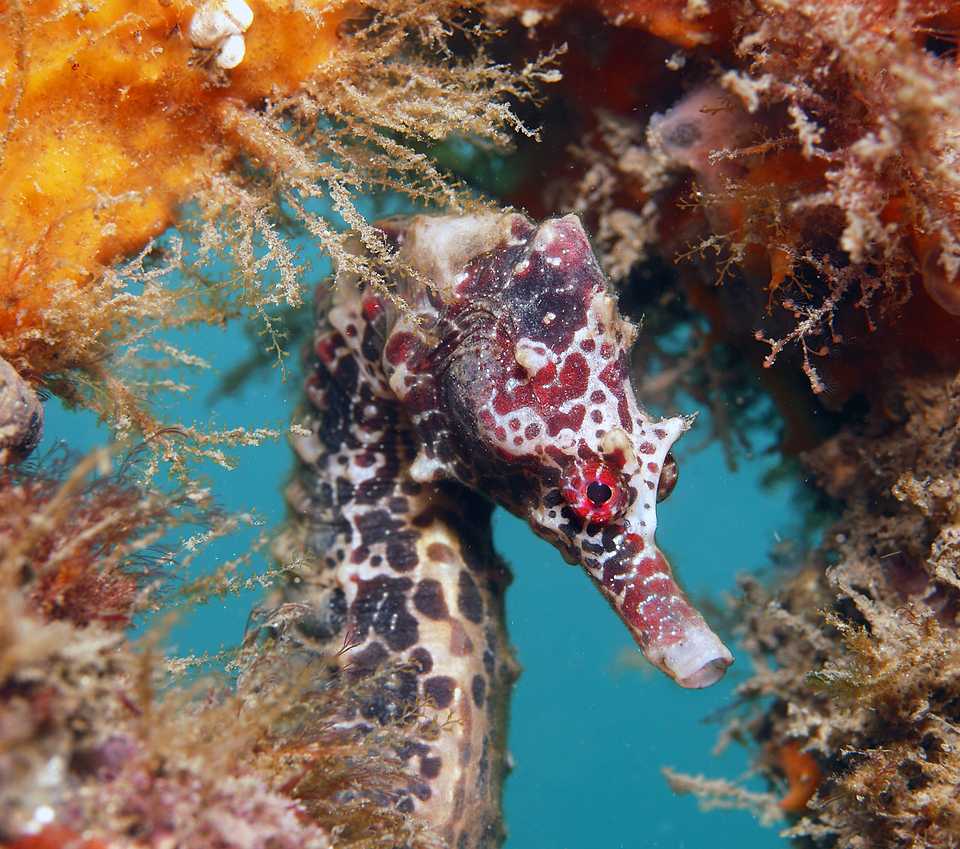
Seahorses, also known by their Latin name hippocampus, are among the more strange creatures you can find beneath the churning waves. These tiny fish are relatives of pipefishes and seadragons, and are amongst the most unique critters that you can find below the salty air, but above the true crushing depths of the abyss. Ranging from barely the size of your fingernail to as large as an adult hand, these beautiful fish come in a wide variety of shapes and colors, from some of the most vibrant patterns in their local ecosystems to perfect camouflage among green and brown foliage. Their long and equine-like faces is where they have derived the name seahorses from, and their bodies are absolutely fascinating considering they are a species of fish. Their long, spindly tails wrap around reef tips or seagrasses to anchor them into place, while they use their long snouts to suck up food, and they can move their eyes independently from one another, an adaptation that makes them an expert at spotting predators. With all of that, though, seahorses are extremely slow swimmers, with the slowest fish in the world being the dwarf seahorse, able to move, at most, at one and a half meters per hour. There is still so much we don’t know about these fascinating little additions to nature’s bounty, but what we do know is amazing in and of itself.
All their traits, advantageous or not, pale in comparison to these undersea fathers of the year. Unlike most fish, seahorses have a very complex relationship with their growing young, in that they carry them to term, unlike many who leave their eggs as soon as they are laid. Even more interesting than this though, is the fact that rather than the mother, it is the father seahorse that carries the young in a sack on their belly. The cause of this strange reproductive method is still currently unknown, though some believe that this occurs to equalize the energy expenditure between males and females during breeding, more study will have to take place before anything conclusive can be said. What is known however, is that the last three weeks of gestation, on average between species, takes place in the male pouch, and that the baby seahorses hatch and acclimate themselves in the relative safety and comfort of the pouch before they come out to seek their own life.
This amazing life cycle is one of many unique possibilities that has arisen since life first began in the world’s oceans oh so many years ago. Whether it's on the reefs, in the shallows, or in the deep abyss, there is no telling how many more crazy critters lurk just out of sight, their own impossibilities still unknown to us to this day, just waiting to be discovered.