Call Today
Mola Mola: Fascinating Facts About the World's Largest Bony Fish
There's no mistaking a mola mola, also known as the ocean sunfish, for any other fish in the sea. As the world's largest bony fish, these unusual marine giants can weigh more than a ton. Their distinctive appearance resembles half a fish with its tail missing, compressed into a tall, thin profile that looks remarkably like a lumpy pancake.
But molas don't start out looking that way. Juvenile ocean sunfish resemble tiny pufferfish, complete with defensive spikes and well-defined tail fins. At around two inches long, those spikes are absorbed, their bodies become compressed, and the tail fin transforms into a curved structure known as a clavus.
How Does a Mola Mola Swim?
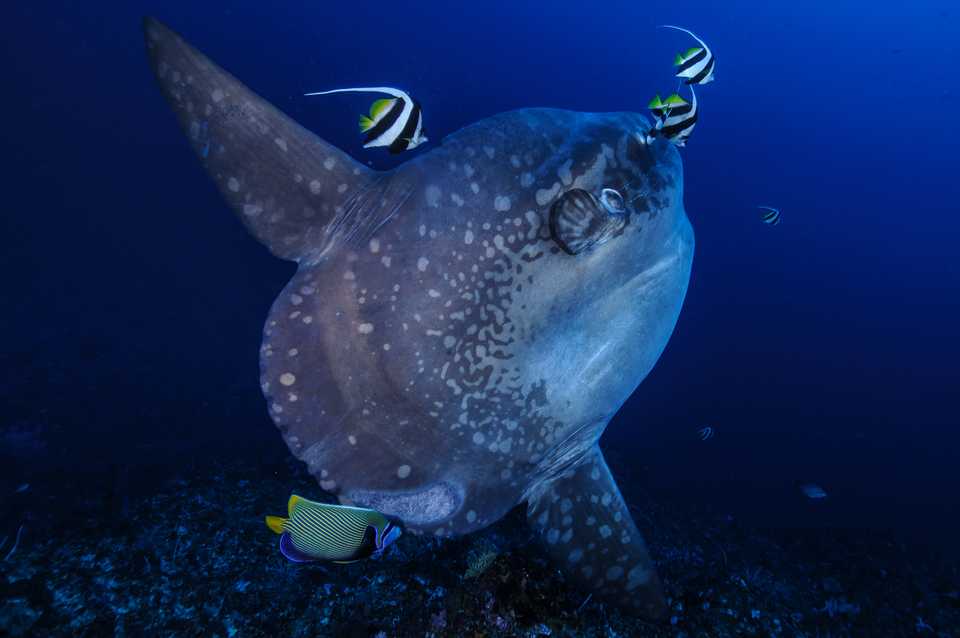
Without a traditional tail fin for propulsion, the mola mola moves through the water by flapping its enlarged dorsal and anal fins. This unusual swimming style typically limits these fish to a leisurely pace of around two miles per hour. But appearances can be deceiving. Molas are capable of short bursts of speed and can even launch themselves several feet into the air.
These spectacular leaps end with a splash that helps dislodge parasites attached to their slow-moving bodies. Jumping can also help molas escape potential predators.
What Eats an Ocean Sunfish?
Mola molas have several defenses against predators. They can change their skin color to blend in with their surroundings, while their wide, flattened bodies help them camouflage against the ocean's surface. Their toughest defense, however, is their thick, leathery skin, which can withstand many bites and nips.
Sharks generally find molas unappealing, although great white and tiger sharks occasionally attack them when other prey is scarce. In temperate and cooler waters, ocean sunfish can also fall victim to orcas, sea lions and seals. However, not every attack is fatal.
A mola's outer body contains substantial cartilage and relatively little blood flow, somewhat like a human ear. This means that even a substantial bite from a sea lion may cause surprisingly little bleeding, allowing the fish to survive.
How Big Do Mola Molas Get?
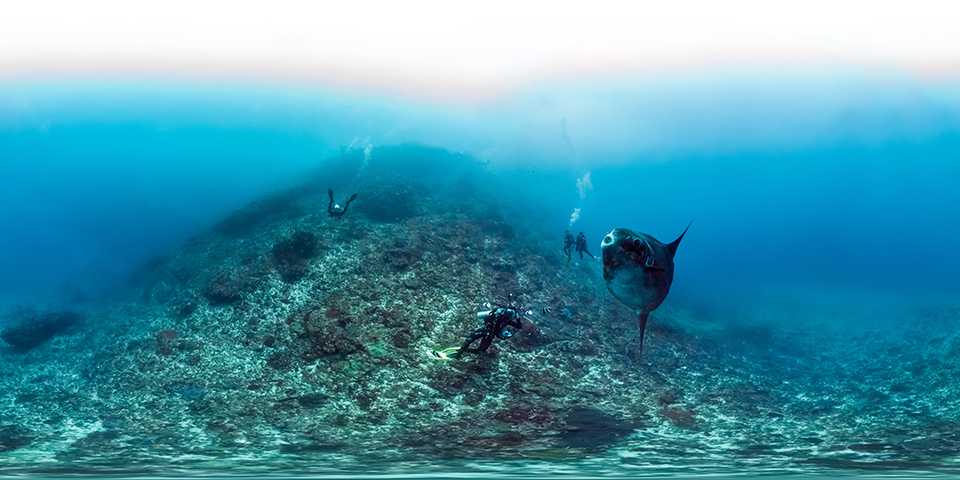
One of the ocean sunfish's most remarkable survival strategies is its ability to reproduce and grow at an extraordinary rate. A female mola can release as many as 300 million eggs at a time, making it one of the most prolific egg producers in the animal kingdom.
Molas are also champions of rapid growth, increasing their body weight by an estimated 60 million times between hatching and adulthood. They accomplish this remarkable transformation quickly. One mola kept at the Monterey Bay Aquarium grew from 50 pounds to nearly 900 pounds in just 15 months.
What Do Mola Molas Eat?
Despite their enormous size, ocean sunfish primarily feed on soft-bodied marine organisms, including jellyfish, zooplankton, squid and salps. Their fused, beak-like teeth aren't designed for chewing. Instead, food is drawn through the mouth and swallowed.
Feeding is nearly a constant activity because many of their favorite foods, particularly jellyfish, consist mostly of water. Molas must consume large quantities to obtain enough nutrients to sustain their massive bodies.
Why Are Mola Molas Called Ocean Sunfish?
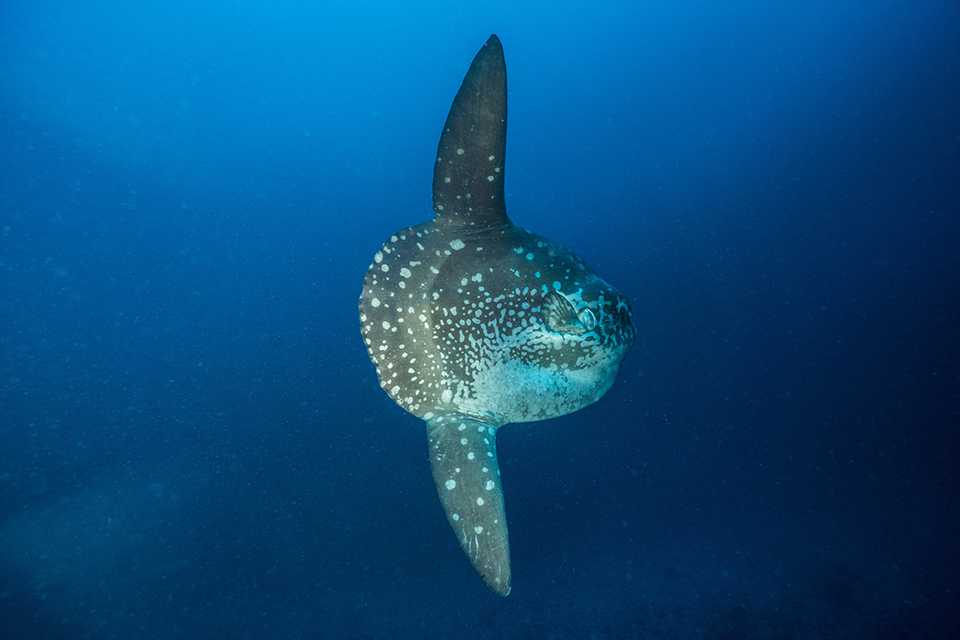
The mola mola gets one of its common names, ocean sunfish, from its habit of lying on its side at the water's surface. This behavior, known as basking, helps the fish warm up after spending time in colder, deeper water.
Molas regularly make deep dives to depths of 2,000 feet or more in search of food. After these cold-water excursions, basking at the surface provides a way to raise their body temperature. For a fish with a relatively slow metabolism, this surface warming is an important part of its daily routine.
Where Can You See Mola Mola While Diving?
Although mola molas are relatively rare sightings in many parts of the ocean, certain destinations offer divers particularly good opportunities to encounter these extraordinary fish.
Bali and Nusa Penida, Indonesia: The waters surrounding Nusa Penida Island and Bali's east coast are among the world's best-known destinations for mola mola encounters. Seasonal sightings attract divers hoping to see these enormous fish up close.
The Galápagos Islands, Ecuador: You can encounter ocean sunfish year-round in parts of the Galápagos, including around Punta Vicente Roca and Cousins Rock. These nutrient-rich waters offer opportunities to see molas alongside an incredible variety of marine life.
Komodo National Park, Indonesia: Mola molas appear seasonally in Komodo's waters, generally from April through November. Divers visiting during this period may have opportunities to encounter these unusual fish among the park's spectacular reefs and currents.
Sea of Cortez, Mexico: Ocean sunfish also visit the Sea of Cortez during late summer and fall, adding another exciting possibility to the region's impressive marine life encounters.
Caradonna Travel Specialists can coordinate your diving and accommodations for a seamless vacation experience. Contact us today at 1-800-330-6611.