Call Today
Caribbean Coral Reef Volunteer Programs
Coral reefs across the Caribbean are facing new challenges from coastal development and climate change. The good news is that a number of organizations are taking proactive steps to expand zones of protection and create coral restoration programs that regrow reefs. And at a number of destinations, divers can take part in these efforts. Here is how divers can give corals a helping hand.
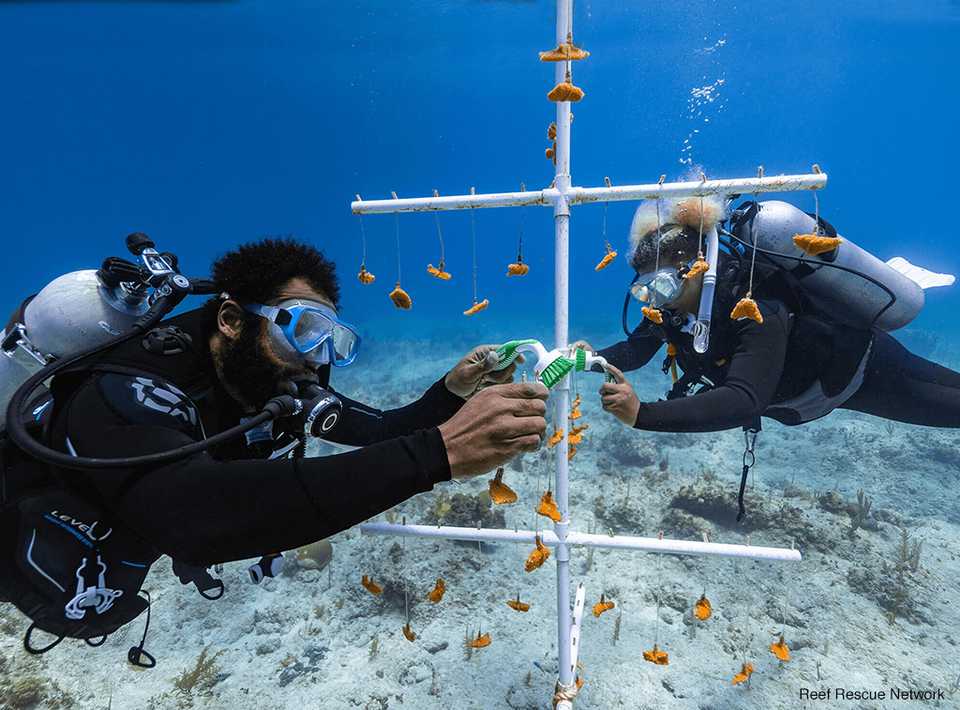
Volunteer divers assist in nursery tasks such as cleaning the coral trees.
Reef Rescue Network
The Reef Rescue Network was created by Florida's Perry Institute for Marine Science to restore coral reefs across the Caribbean. The Network's initial coral nursery and outplanting projects in the Bahamas have since expanded to include 14 islands. Projects are created in partnership with local dive operators, resorts, and conservation groups
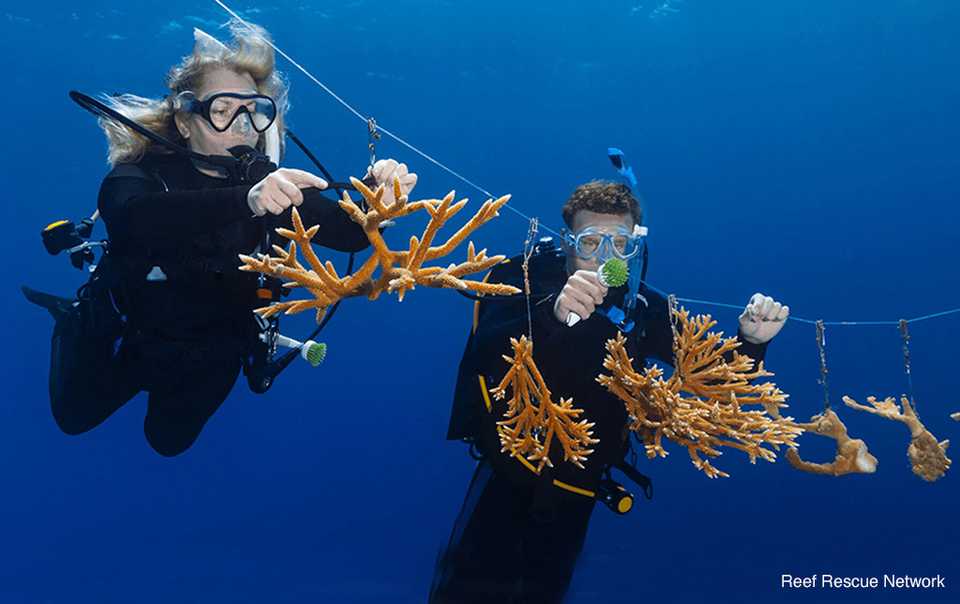
Coral seedlings are sometimes suspended in open water to capture passing nutrients.
Little Cayman Island
One of the Caribbean's original coral restoration projects has been quietly going about its business on the shores of Little Cayman Island since 1998. A primary focus of the Central Caribbean Marine Institute is the restoration of staghorn and elkhorn coral, which are essential species for reef building. Institute research continues to find new ways to improve coral propagation, and educational outreaches have spawned five new coral nurseries on the island. Divers can get involved by volunteering for nursery maintenance and out-planting projects for one or more days, and those seeking a deeper involvement can engage in a four-day residential program or an extended internship.
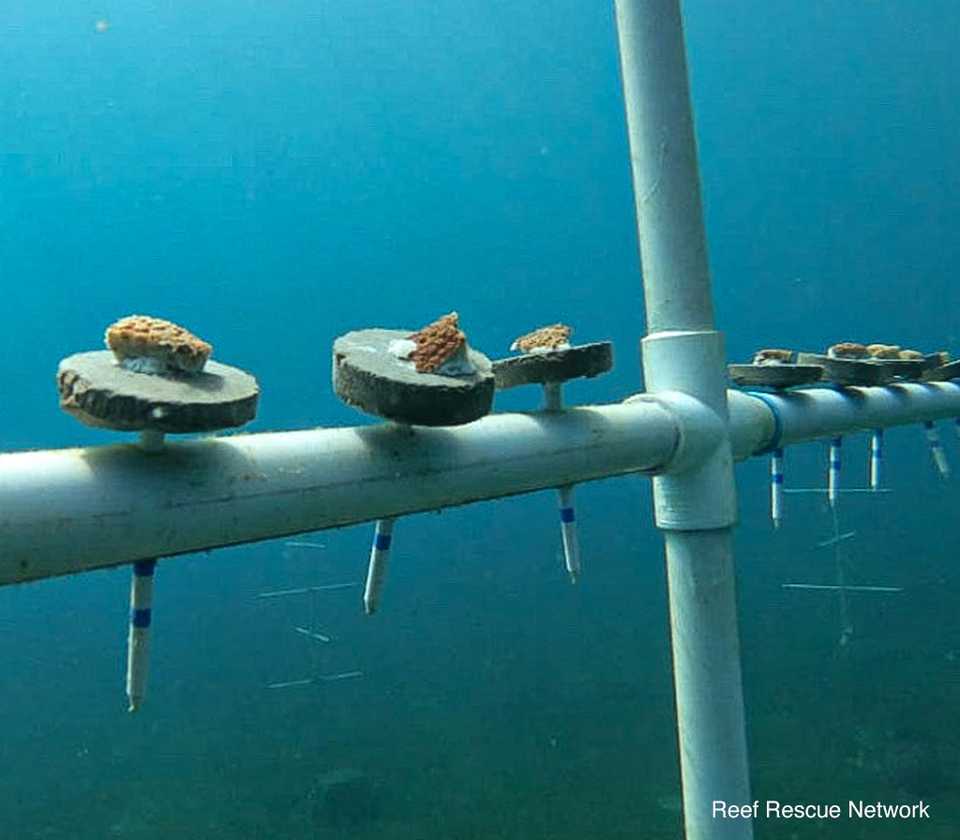
New corals can be regrown from small fragments.
Bonaire
The Reef Renewal Foundation Bonaire was launched in 2012 as a partnership between the Coral Restoration Foundation, Bonaire National Marine Park, and Buddy Dive Resort. The first nurseries were established in the shallows of Buddy's house reef and have since expanded to eight nurseries. To date, foundation staff and volunteer divers have replanted more than 22,000 corals in the waters of Bonaire. Divers staying at Buddy Dive can assist in nursery maintenance and out-planting projects by signing up for a Reef Renewal Dive, Reef Renewal Specialty, or a full Reef Renewal Week Package that includes 12 dives devoted to coral restoration.
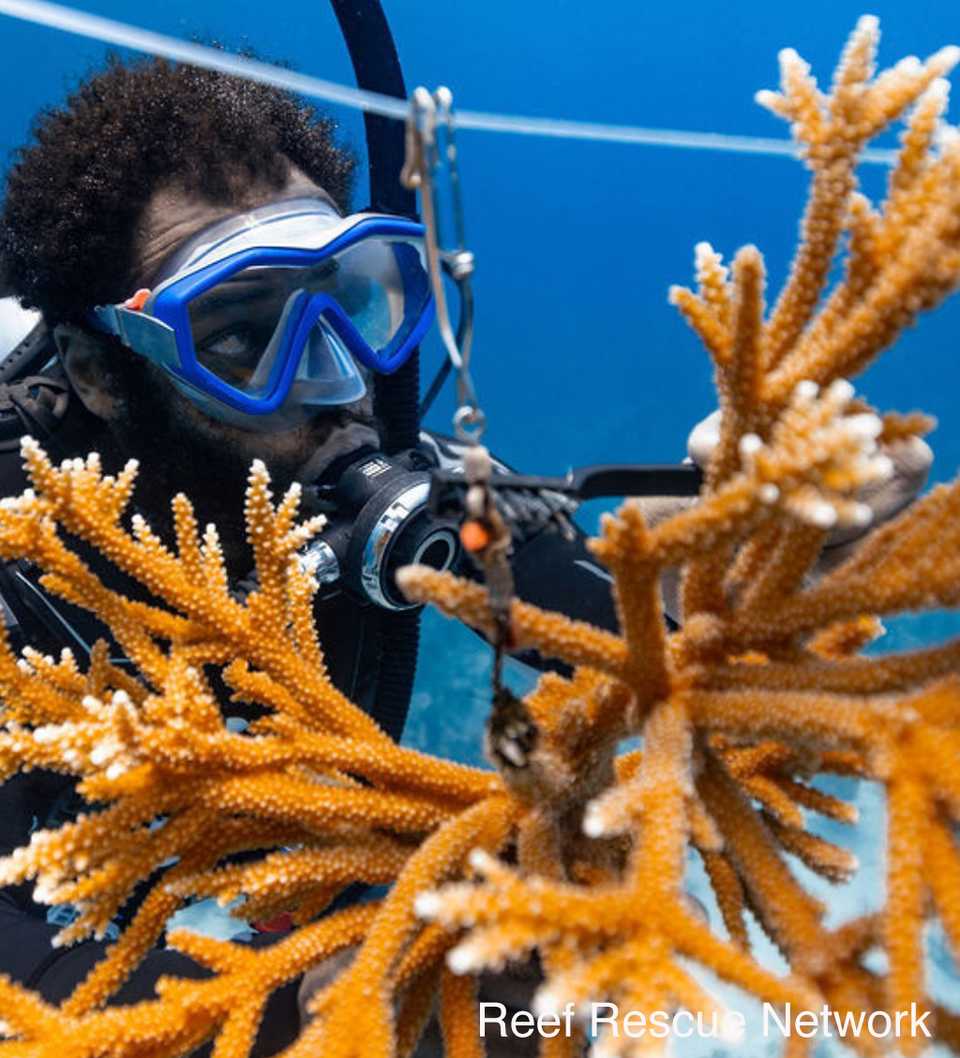
It can take one or more years of growth for corals to reach replanting size.
St. Lucia
St. Lucia's Anse Chastanet Resort overlooks some of the Caribbean's most colorful coral reefs. Scuba St Lucia established a coral nursery program in 2017 to ensure the future vitality of these reefs. In 2024, a partnership with the REEF Rescue Network resulted in a significant expansion of this program, with the goal of planting more than 100 new corals within three years wile also expanding the nursery footprint. The nurseries are located directly off the resort's beach, easily accessible from shore. Divers can volunteer to participate in nursery maintenance and out-planting the corals on the reef, or take a deeper dive into coral husbandry with a Reef Rescue Specialty Course.
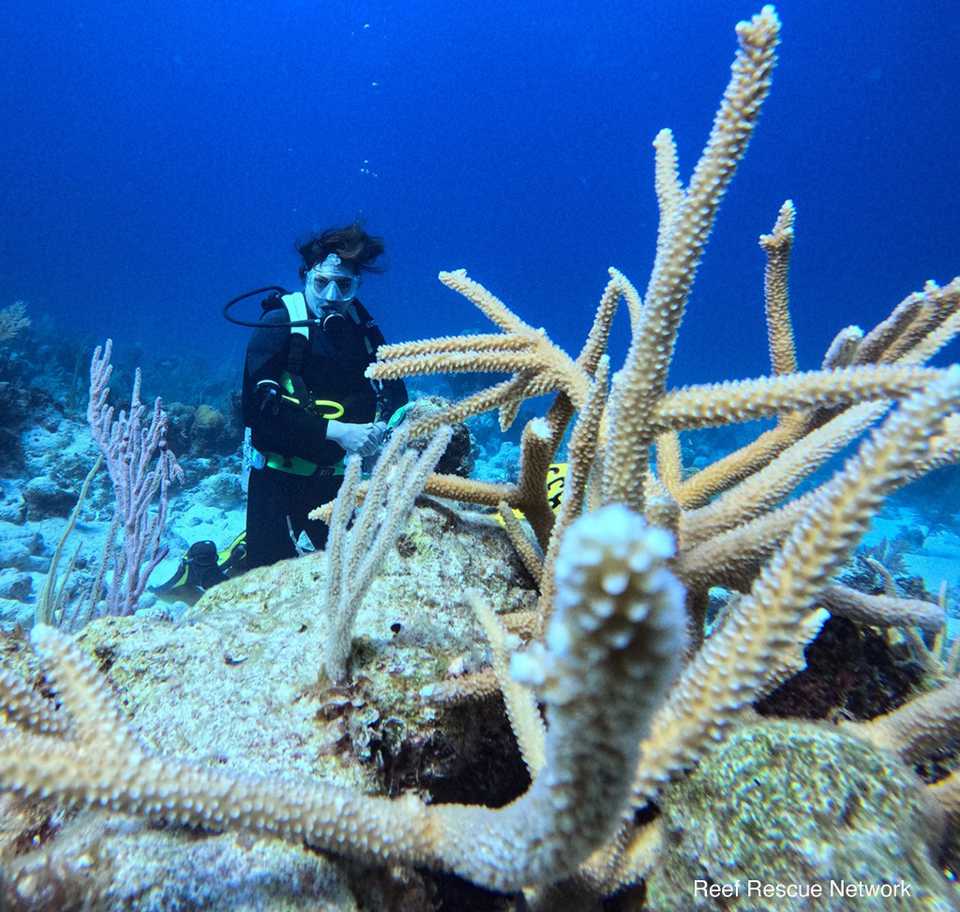
Successful replanting of staghorn corals revitalizes the reef.
Saba
Saba Island sits atop the largest submerged atoll in the Atlantic Ocean. This large underwater plateau supports large areas of encrusting and reef-building corals protected within the Saba’s National Marine Park, but still vulnerable to the spread of stony coral disease. The Saba Conservation Foundation was created in 2015 to reverse this loss and nurture the next generation of corals. The foundation maintains more than a dozen eco-friendly coral nursery trees in nearshore island waters. Sea Saba Dive Center invites visiting divers to participate in the ongoing cleaning and maintenance of these nurseries
Cozumel
The Cozumel Coral Reef Restoration Program was launched in 2017 with the creation of 16 concrete reef structures used to regrow coral fragments into colonies to be out-planted onto area reefs. These structures are located in shallow coastal waters that divers can easily reach from shore. More recently, an additional 10 structures were added in deeper water where currents bring clean water that accelerates regrowth. All 26 platforms are maintained by program staff with the help of volunteers. Divers looking to get involved can take part in a one-day orientation program or a two-way Coral Reef Conservation specialty course.
Grenada & Barbados
In 2025 the Reef Rescue Network launched new coral nurseries in partnership with Barbados Blue and Grenada's Eco Dive. In Barbados, coral trees growing staghorn and elkhorn corals were established near the Friars Craig shipwreck. This popular dive site also holds a collection of coral-encrusted reef balls that provide new habitat for marine life. A similar nursery in Grenada is located in mid-depth waters off Grand Anse Beach at the dive site known as Quarantine Point. Both Barbados Blue and Grenada's Eco Dive offer Reef Rescue Experiences that provide hands-on training experiences and two-dive certifications for a Reef Rescue Diver Specialty.