Call Today
Why Divers Love Spotting Blue-Ringed Octopuses
It is one of the most deadly and venomous creatures you could ever find in the ocean. You might encounter this deadly killer anywhere from the reefs of Australia to the waters of Japan. One touch and the neurotoxins housed within this cold-blooded menace would prove fatal within minutes. In fact, a single little nip from this creature has enough venom and potency to put down not just one or two people, but up to twenty adult humans. Not only does it have venom that can kill within minutes, this stealthy hunter is also incredibly intelligent. Capable of solving puzzles and outsmarting both possible predators and prey, its behavior can be both cunning and unpredictable. All of this combined makes this a true monster of the sea… and what creature is this?
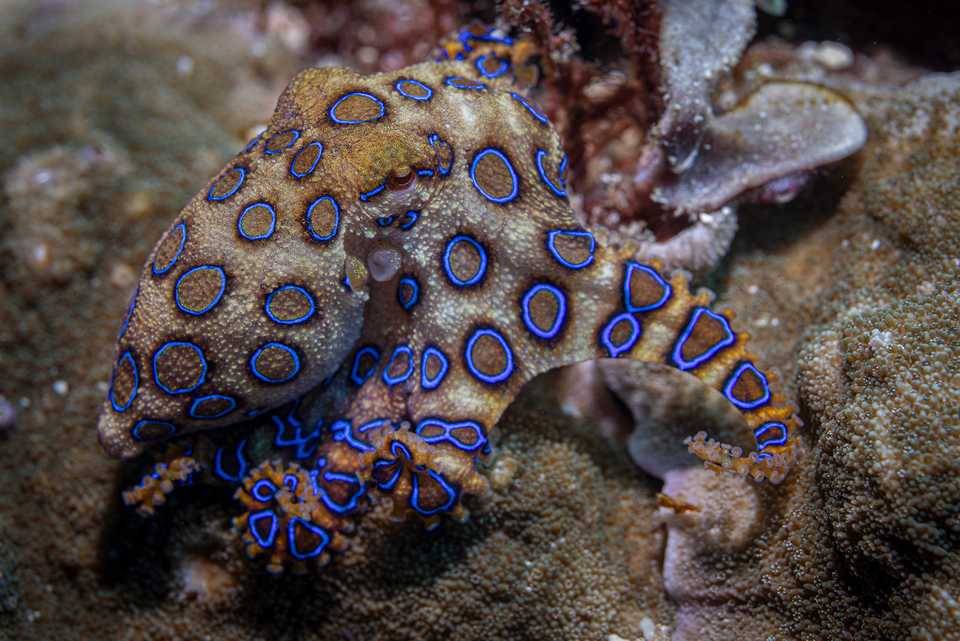
Blue-ringed octopus displaying its bright blue rings on a coral reef
The blue-ringed octopus, one of the most adorable and charming-looking cephalopods that you will ever meet. This tiny octopus grows from five to eight inches long – about the size of an adult hand. It lives on a diet mostly made up of small shrimp and crabs, hiding in crevices or coral rubble waiting to pounce on a passing meal. As soon as its tentacles trap the prey, the blue-ring deploys a sharp parrot-like beak to inject a paralyzing dose of venom. The toxins that this little guy creates might seem like overkill, but not only does this venom assist with its hunting, but it also provides protection, making this octopus a deadly snack for anything foolish enough to take a bite.
All of this said, the blue-ringed octopi are incredibly cute and docile. This is not an invitation to reach out and pet one of these little guys if you are lucky enough to spot one in the wild, but rather, that simply finding one on a reef during a dive could be considered an incredible find and you should enjoy it if you happen across one. Spotting a blue-ringed octopus requires a keen eye, as they are masters of camouflage. Their skin contains special cells that can change color to match their surroundings. The bright blue rings that give this octopus its common name only become visible when it feels threatened.
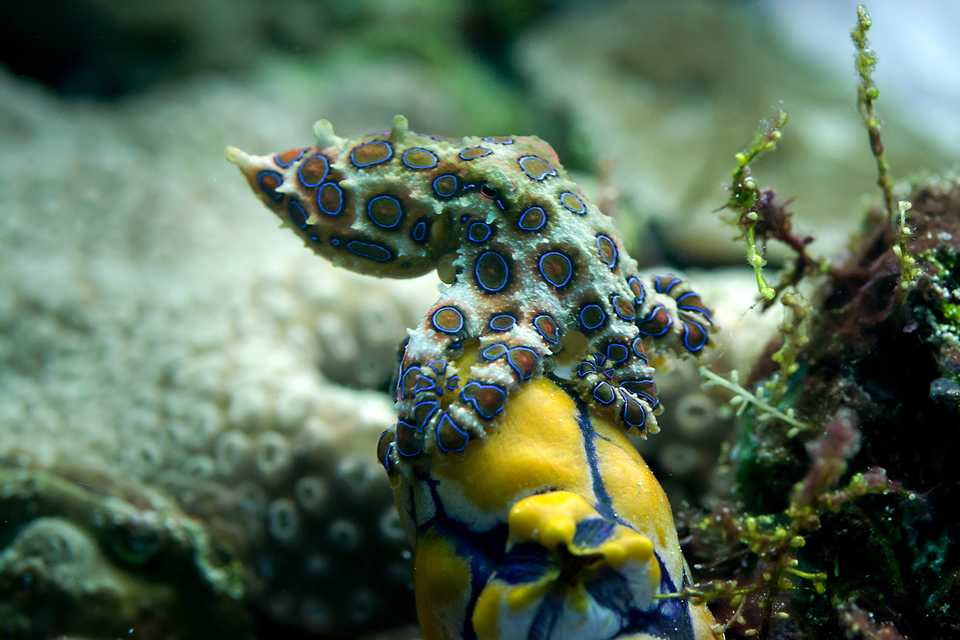
Venomous blue-ringed octopus in Australian waters
One more time, do not try to touch or get near one of these adorable little creatures, because it will protect itself, and you will not like the results! If you’ve ever seen one in the wild, let us know! These bright blue moppets are an incredibly valuable part of their home ecosystems, providing marine stability and keeping check on many of the filter feeders that could wreck reefs if left unchecked.