Diving in Dominica
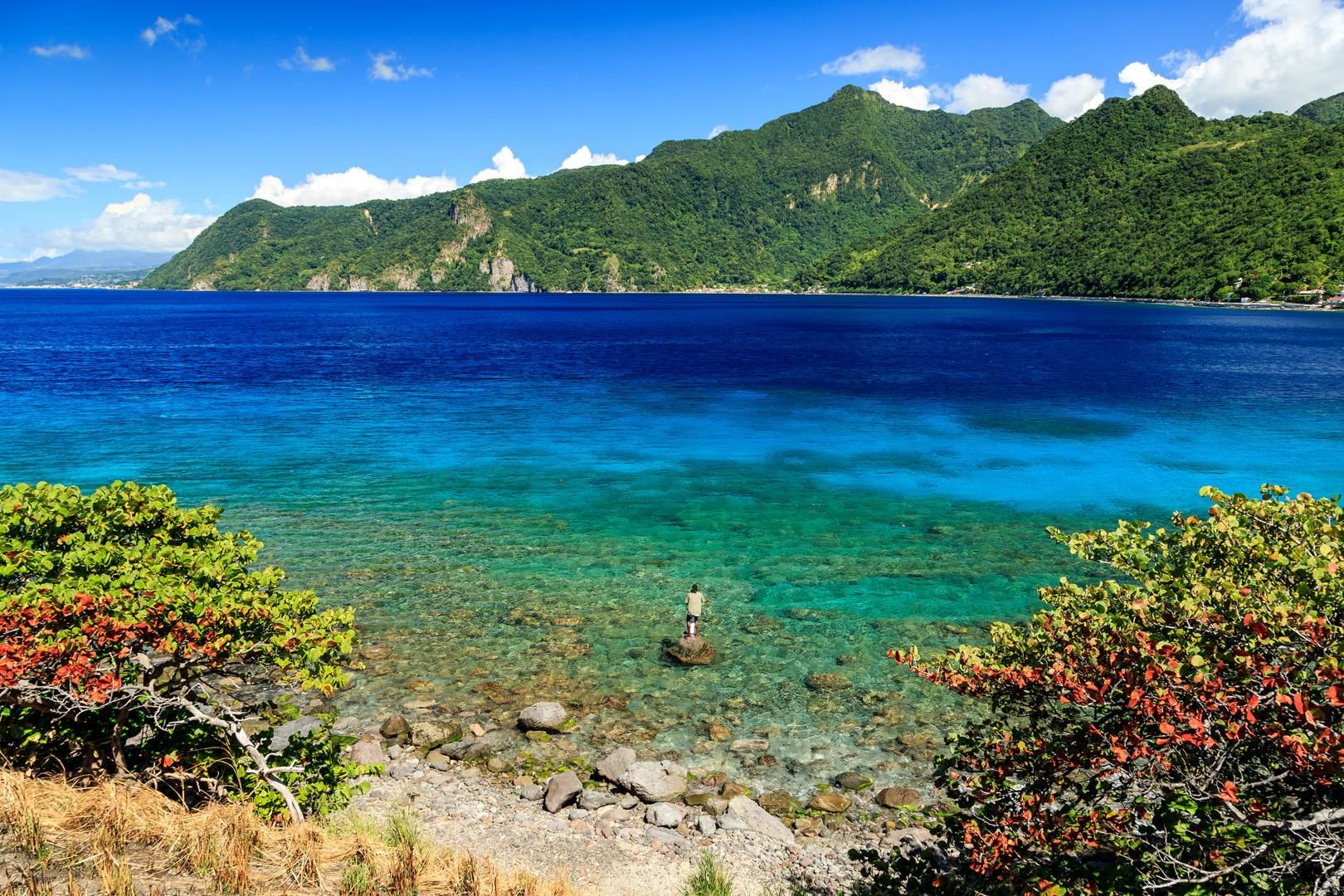
Dominica is an eco-friendly destination, known for its lush forests, stunning waterfalls and soothing hot springs; but it is what lies below the calm waters that attracts divers from all around the world to this Nature Island. The diving in Dominica is some of the best in the Caribbean. Lots of small critters, spectacular walls, turtles, and mounds upon mounds of colorful corals, sponges, and crinoids. And don’t be surprised if you are greeted by playful dolphins or whales during your surface intervals. The waters around Dominica are just teeming with life. The water temperature is normally 78-84F degrees all year, slightly warmer in the summer and cooler in the winter. A 2 mm shorty to 3 mm full suit is recommended.
Passport and/or Visa Requirements
A valid passport is required. Other required items include a return ticket, confirmation of hotel reservation, and another form of picture ID required. No Visas are required for U.S. and Canadian citizens, however it is the customer's responsibility to ensure his or her own visa requirements, and no refunds will be awarded for customers denied access for lack of proper Visa. EXIT REQUIREMENTS: There is a departure tax of $22.00 pp US payable at the airport upon departure in cash.
Immunizations
Vaccinations are not required for entering the Caribbean if you’re coming from the U.S., Britain, or Canada.
Culture and Customs
Mas Domnik is Dominica's Carnival: a pre-lentern celebration which runs from December until Ash-Wednesday. Another major event is the annual World Creole Music Festival in October, featuring the highest level of Caribbean and world entertainment. During summer months (May – November) you may enjoy Dominica's traditional feasts in various villages throughout the Island.
Electricity, Telephone and Internet Access
The island operates on 220/240 volts - 50 cycles, so both adapters and transformers are necessary for U.S.-made appliances. However, there are generally 110V US style outlets in the hotel rooms, along with 110 outlets available in the dive shops for the recharging camera and flashlight batteries. Approximately 70% of Dominica’s electric power supply is hydro generated. Diesel generators provide the remainder.
Dominica has a modern, fully and reliable digital telecommunication system. The area code for Dominica is 767. International Direct Dialing is available from your hotel rooms.
Internet access is available on island for those who have their own wireless laptops. For those without computers, the hotels generally have a computer available for internet use for a small fee
Water Quality
The water is of good quality and safe to drink, however if you are accustomed to drinking bottled water or have a sensitive system, it may be best to drink bottled water, which is available for purchase at restaurants, bars, hotels or at local grocery stores.
Language & Currency
English is the official language with Creole (french based language with West African syntax) widely spoken by the locals. The Eastern Caribbean dollar (EC$) is the currency used locally. At the banks you will get EC$2.67 per US$1 cash, and EC$2.68 per US$1 travellers' cheques. United States dollars, British Pounds and the Euro currency are acceptable everywhere on the island.
Time
Dominica is on Atlantic Standard Time, 1 hour ahead of Eastern Standard Time in the United States. Dominica does not observe daylight saving time, so when the United States changes to daylight saving time, clocks in Dominica and the U.S. East Coast will be on the same time.
History, Art, and Culture
Dominica was originally named 'Wai'tukubuli' or 'Tall is Her Body’ by the original inhabitants, the Arawak and Carib Indians. However, the name that stuck was given by Christopher Columbus, who named the island for the day of the week he spotted it - Sunday, 3 November 1493.
With its rich, fertile land and strategically located harbour, Dominica has been the subject of envy by European powers throughout the island’s history. In 1627 the English took theoretical possession from the natives without settling, but by 1635 France laid claim to the island and maintained power until 1759 when the English captured it. Dominica changed hands between the two countries multiple times, passing back to France (1778) and again to England (1783). The French attempted to invade in 1795 and 1805 before eventually withdrawing, leaving Britain in possession. Dominca achieved full Independence on November 3, 1978.
Dominica’s rich culture comes from its mix of English, French, African, and Carib peoples. This is evident in their food, music, dance, language, and hospitality.
Location and Size
Dominica is the largest and most mountainous of the Windward Islands, with an area of 289.5 Sq. miles (790sq.km). It is 29 miles long (49km) and 16 miles (25km) at its widest. The island of Dominica is located between the two French islands of Martinique in the south and Guadeloupe in the north. Located approximately 15 degrees North and 61 degrees West, it is south of Puerto Rico and north of Barbados. The capital city is Roseau (pronounced rose-oh).
Population
Approx. 71,500